 how-to
7 Ways to Cut Business Restocking Costs Without Stockouts
Last Updated: October 26, 2026
Quick Summary
To reduce restocking costs, measure the full cost of getting goods onto your shelves, not just the purchase price. Track freight, ordering, carrying, waste, and stockout losses, then set reorder points and safety stock from your own sales and lead-time data. Buy in bulk only for items that sell steadily.
- The purchase price is about 86% of true restocking cost in the worked example.
- Reorder Point = (Average daily sales × Lead time in days) + Safety stock.
- Use the longest lead time actually experienced in the last three months for safety stock.
- A volume discount on a slow-moving product is cash converted into shelf clutter.
- Compare at least two suppliers on the same items and quantities for a fair quote.
Table of Contents
- Why Restocking Costs Quietly Drain Your Profit
- Break Down What Restocking Actually Costs You
- How to Calculate Reorder Points and Safety Stock
- Use the Economic Order Quantity Formula to Balance Order Size
- Track Stock With a Simple Inventory Management Spreadsheet Template
- Buy Bulk Buying FMCG Products Without Overstocking
- Negotiate Supplier Pricing and Review Delivery Reliability
- Place Your Next Bulk Order With Bundle Buy Ghana
- Frequently Asked Questions
Why Restocking Costs Quietly Drain Your Profit
Restocking is the single line item most shop owners never properly audit. Every carton that arrives carries more than the wholesale price: transport, handling, spoilage, and money tied up in slow-moving stock all ride along with it.
The drain is invisible because it hides inside normal operations. You pay for a trotro trip to the market.
None of these appear on a receipt as "restocking cost." They appear as a thinner profit margin at month end.
Restocking costs are the total expense of getting goods back onto your shelves, including the purchase price, freight, handling, storage, and the cost of money locked in inventory. Most businesses only count the first item on that list.
That's the core problem. Fix the measurement and the savings follow.
Break Down What Restocking Actually Costs You
Start with a full cost picture before cutting anything. Many businesses find that the purchase price is only part of what they spend.
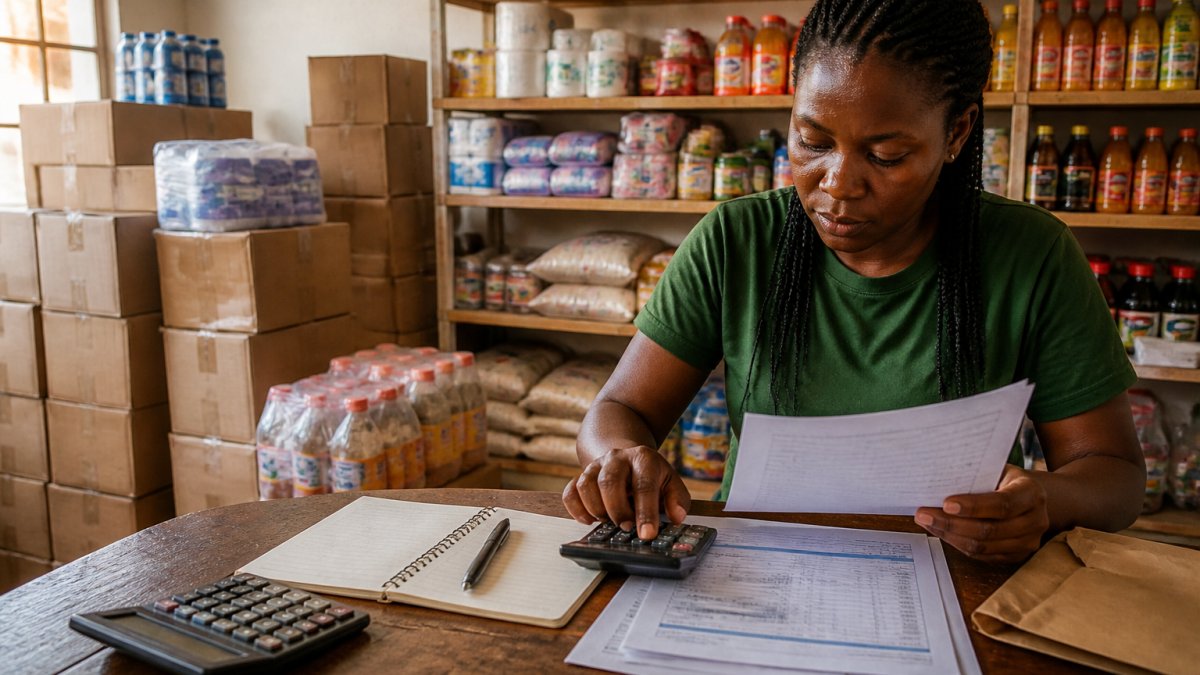
Here is the breakdown we recommend working through, with a worked example for a shop that sells 300 cartons of a fast-moving beverage per month:
- Purchase price: what the supplier charges per carton. Example: GHS 50 per carton × 300 cartons = GHS 15,000 per month.
- Freight and transport: delivery fees, fuel, or fare to collect goods. If you pay GHS 400 per delivery and order twice a month, that is GHS 800.
- Ordering costs: time spent calling, negotiating, and confirming orders. If you spend two hours per order at GHS 30 per hour, two orders cost GHS 120.
- Carrying costs: storage space, security, and money tied up in stock. If you hold an average of 150 cartons and storage plus capital cost is GHS 5 per carton per month, that is GHS 750.
- Waste and spoilage: expired, damaged, or unsold goods. A common pattern is 2-3% of stock value, so GHS 300-450 on this example.
- Stockout losses: sales you never made because shelves were empty. If you lose 10 sales per month at GHS 20 margin each, that is GHS 200.
Add those up and the true restocking cost is not GHS 15,000 but roughly GHS 17,320-17,470 per month. The purchase price is about 86% of the total.
Most shops track only the first line. The other five are where the money leaks.
A common mistake is treating a cheap supplier as automatically cheaper. If that supplier delivers late or short, the stockout cost wipes out the discount.
To make this practical, build a simple restocking cost sheet with one column per cost line above. Update it each time you place an order. After two months you will see which line is growing fastest and can target it directly.
Here is the full restocking cost breakdown, using the article's worked example of a shop selling 300 cartons of a fast-moving beverage per month.
| Cost line | Example amount | Note |
|---|---|---|
| Purchase price | GHS 15,000 per month | GHS 50 per carton × 300 cartons |
| Freight and transport | GHS 800 | GHS 400 per delivery, twice a month |
| Ordering costs | GHS 120 | Two hours per order at GHS 30 per hour |
| Carrying costs | GHS 750 | 150 cartons average at GHS 5 per carton |
| Waste and spoilage | GHS 300-450 | 2-3% of stock value |
| Stockout losses | GHS 200 | 10 lost sales at GHS 20 margin each |
| True restocking cost | Roughly GHS 17,320-17,470 per month | Purchase price is about 86% of total |
How to Calculate Reorder Points and Safety Stock
A reorder point tells you exactly when to place the next order, so you neither run dry nor overbuy. The formula is simple:
Reorder Point = (Average daily sales × Lead time in days) + Safety stock
Work an example. If you sell 10 cartons a day and your supplier takes 5 days to deliver, you need 50 cartons to cover the wait. Add safety stock for busy days.
Safety stock covers demand you didn't expect. A practical approach is to hold enough for your busiest selling days plus a buffer for delivery delays.
Safety Stock = (Peak daily sales − Average daily sales) × Lead time
If peak sales hit 15 cartons and average is 10, with 5-day lead time, safety stock is 25 cartons. Your reorder point becomes 75.
That works when lead time is steady. In practice, suppliers are not always on time. A more robust safety stock formula accounts for lead-time variability:
Safety Stock = (Peak daily sales × Longest lead time) − (Average daily sales × Average lead time)
Suppose your average lead time is 5 days but your supplier has taken up to 9 days. Peak daily sales are 15 and average daily sales are 10. Safety stock = (15 × 9) − (10 × 5) = 135 − 50 = 85 cartons. Your reorder point becomes (10 × 5) + 85 = 135 cartons.
That is a much higher buffer, and it costs money in carrying costs.
Check this weekly. Sales data changes with seasons, school terms, and holidays. A reorder point set in January may fail you in December.
A simple tracking sheet with columns for date, daily sales, and delivery lead time will give you the real numbers these formulas need. After four weeks you will have enough data to set reorder points that reflect your actual operation, not a guess.
Use the Economic Order Quantity Formula to Balance Order Size
The economic order quantity formula helps you decide how much to order at once. Order too little and you pay too much in ordering and transport. Order too much and your money sits in storage.
The classic formula weighs ordering costs against carrying costs:
EOQ = √(2 × Annual demand × Ordering cost per order ÷ Carrying cost per unit)
You don't need perfect numbers. Even rough figures stop you from guessing. If placing an order costs you in transport and time, and holding stock costs you in space and security, the formula finds the sweet spot.
Here's what most guides miss: in practice, suppliers set minimum order quantities. Your EOQ may say 40 cartons but the supplier only sells in 60s. Adjust upward and recalculate carrying costs.
Balance matters more than precision. The goal is fewer emergency orders and less dead stock, not a perfect equation.
Track Stock With a Simple Inventory Management Spreadsheet Template
You cannot cut what you cannot see. An inventory management spreadsheet template gives you a clear view without buying software.
Build these columns:
- Item name and unit
- Current stock level
- Average daily sales
- Lead time in days
- Reorder point
- Quantity on order
- Supplier name and contact
Update it each time goods arrive or leave. Set the sheet to flag items below reorder point.
This simple system prevents the two expensive errors: running out and overstocking. It also gives you real sales data to feed into your reorder calculations.
For shops in remote areas, tracking is even more important because delivery takes longer and a stockout lasts longer. We cover this in our guide on FMCG bulk supply for remote shops.
Buy Bulk Buying FMCG Products Without Overstocking
Buying in bulk lowers your per-unit price, but only if the stock actually sells. The trap is confusing a discount with a saving.
Set a rule: only buy in bulk for items that move steadily. Fast sellers justify large orders. Slow movers should stay small.
Watch out: a volume discount on a slow-moving product is not a saving. It is cash converted into shelf clutter. Before you scale up an order, check the item's weekly sales and how long the extra stock will take to clear.
Also confirm the total landed cost. Our guide on how to order wholesale without hidden fees shows what to check before placing a bulk order. Ask what the price includes: delivery, handling, and any fees.
Bulk buying works when it matches demand. It hurts when it's driven by the discount alone.
Negotiate Supplier Pricing and Review Delivery Reliability
Supplier pricing is rarely fixed. Most suppliers have room to move on volume, payment terms, or delivery. Ask directly.
Before you negotiate, know your numbers. For guidance on vetting and choosing reliable FMCG suppliers, see our guide to choosing reliable FMCG suppliers. Bring your order history and your reorder schedule. Suppliers respond better to buyers who order predictably.
Compare at least two suppliers on the same items. Ask each for a quote on the same quantities so you compare fairly. The Chartered Institute of Procurement & Supply recommends weighing total value, not just unit price.
Then review performance. Track each supplier on:
- On-time delivery
- Order accuracy
- Product quality
- Response time to issues
A supplier who is slightly pricier but reliable often costs less overall. Late deliveries create stockouts, and stockouts cost sales.
Check delivery terms before you commit. Our delivery information explains how we handle nationwide delivery.
Place Your Next Bulk Order With Bundle Buy Ghana
Cutting restocking costs comes down to three habits: measure the full cost, order to a calculated reorder point, and buy bulk only where demand supports it. Do those and your margin stops leaking.
Bundle Buy Ghana supplies wholesale and retail FMCG goods to shops, hotels, schools, and households across the country. You get flexible pricing that suits your order size, nationwide delivery, and mobile money payments that keep your cash flow simple.
Whether you run a small minimart or a large institution, you can order at the scale that works for you. Start with a small order, test the delivery, then scale up.
Get started with Bundle Buy Ghana and restock with confidence instead of guesswork. Place your order through our bulk order page.
Frequently Asked Questions
How can a small shop reduce restocking costs without running out of stock?
Start by setting a reorder point for each fast-moving item: average daily sales multiplied by supplier lead time, plus a small safety buffer. Review sales data weekly so the reorder point stays accurate. Then consolidate orders with one reliable supplier and ask for volume pricing on your top 20 lines. These three steps cut restocking costs without raising stockout risk, because you order based on actual movement rather than guesswork.
What is a restocking fee and does it affect my business?
A restocking fee is a charge some suppliers apply when you return unwanted or incorrectly ordered goods, usually a percentage of the item's value. It raises your effective restocking costs because you pay for stock you cannot sell. Check return terms before ordering, especially on seasonal or slow-moving lines, and confirm minimum order quantities so you do not order more than you can move.
How often should a small business reorder stock?
Reorder frequency depends on lead time and sales velocity, not a fixed calendar. Fast movers in a busy minimart may need weekly replenishment; slower lines can run on two-week or monthly cycles. Use your inventory management spreadsheet template to flag items hitting their reorder point, then group orders to hit minimum order quantities and qualify for volume discounts.
How does bulk buying FMCG products lower the cost per unit?
Suppliers price by volume: a full carton or pallet costs less per unit than a single pack because handling, freight and admin costs are spread across more goods. Bulk buying FMCG products also reduces the number of orders you place, cutting ordering costs. The catch is carrying costs and storage space, so match order size to what you can sell before stock ages or ties up cash.