 how-to
How to Save on Restaurant Supplies in Ghana: 2026 Guide
Table of Contents
- Step 1: Budget by Operational Impact, Not by Category
- Step 2: Compare Total Cost of Ownership Before You Buy Restaurant Supplies
- Step 3: Choose Wholesale Food Suppliers in Ghana on Terms, Not Just Price
- Step 4: Make Bulk Buying for Restaurants Work Without Tying Up Cash
- Step 5: Tighten Restaurant Inventory Management to Stop Overordering
- Step 6: Learn How to Reduce Food Waste in Restaurants and Protect Your Margins
- Step 7: Negotiate, Compare Quotes, and Lock In Delivery Costs
- Common Mistakes That Quietly Raise Your Restaurant Supplies Bill
- Frequently Asked Questions
Last Updated: October 21, 2026
Step 1: Budget by Operational Impact, Not by Category
Most restaurant owners in Ghana budget by line item: rice here, oil there, packaging somewhere else. That approach hides where the real money goes. A smarter method is to rank every purchase by how much it affects daily service. If the fryer dies, dinner service stops. If the napkin order is late, nobody notices.
Start by listing your supplies in three tiers:
- Tier 1 (service-critical): cooking oil, gas, staple proteins, refrigeration parts
- Tier 2 (revenue-driving): packaging, drinks, signature ingredients
- Tier 3 (comfort): décor, premium condiments, branded extras
Fund Tier 1 first, every month. This is how to save on restaurant supplies without cutting the things that keep plates moving.
Step 2: Compare Total Cost of Ownership Before You Buy Restaurant Supplies
The sticker price is the smallest part of what you pay. Total cost of ownership (TCO) is the full cost of an item over its working life: purchase price, delivery, repairs, downtime, and replacement. A cheap chest freezer that fails twice a year costs more than a better unit that runs clean.
Run this quick comparison before any big purchase:
| Cost Factor | Cheap Option | Better Option |
|---|---|---|
| Purchase price | Lower | Higher |
| Delivery and installation | Often extra | Sometimes included |
| Repairs per year | Frequent | Rare |
| Downtime lost | High | Low |
| Years of service | Short | Long |
| Real cost over lifespan | Often higher | Often lower |
That table is the whole argument. Price is what you pay today; TCO is what you pay over five years.
Step 3: Choose Wholesale Food Suppliers in Ghana on Terms, Not Just Price
Choosing wholesale food suppliers in Ghana comes down to terms, not just the quoted price. Payment windows, delivery reliability, and minimum order sizes decide whether a supplier actually saves you money. A supplier who charges slightly more but delivers on time and lets you pay in 14 days is worth more than a cheaper one who leaves you short.
Most restaurant owners compare only the unit price. A better approach is to calculate the landed cost per order: goods + delivery + handling fees + any cost of stockouts or emergency purchases. That number, not the invoice subtotal, is what hits your margin.
Ask every supplier these questions before you commit:
- What is the minimum order quantity, and does it change by product?
- How many days do I get to pay, and is there a discount for early payment?
- Is delivery free, and to which areas? What is the charge for outside those areas?
- What happens if an order arrives late or short, do you credit, replace, or refund?
- Can I set a standing weekly order with a fixed delivery day?
Compare at least three quotes side by side using the same product list and delivery address. The lowest number rarely wins once delivery costs and stockouts are added in. A common pattern is that the cheapest quote has the longest lead time or the smallest payment window, which forces you to keep more cash tied up in stock.
Negotiation levers that work in practice:
- Volume commitment: Offer to consolidate all your dry goods with one supplier for a quarter in exchange for a better price or free delivery.
- Payment terms: Ask for 14 or 30 days instead of cash on delivery. Even a 7-day window improves cash flow.
- Delivery consolidation: Request that all orders ship on one fixed day per week to reduce delivery fees.
- Standing order rate: For repeat items like rice, oil, or packaging, ask for a fixed price for 3-6 months.
According to guidance from the Ghana Standards Authority, buying from suppliers who meet food safety standards protects you from costly rejections later. A supplier who cannot show basic compliance is a false economy, one rejected delivery can wipe out months of price savings.
Step 4: Make Bulk Buying for Restaurants Work Without Tying Up Cash
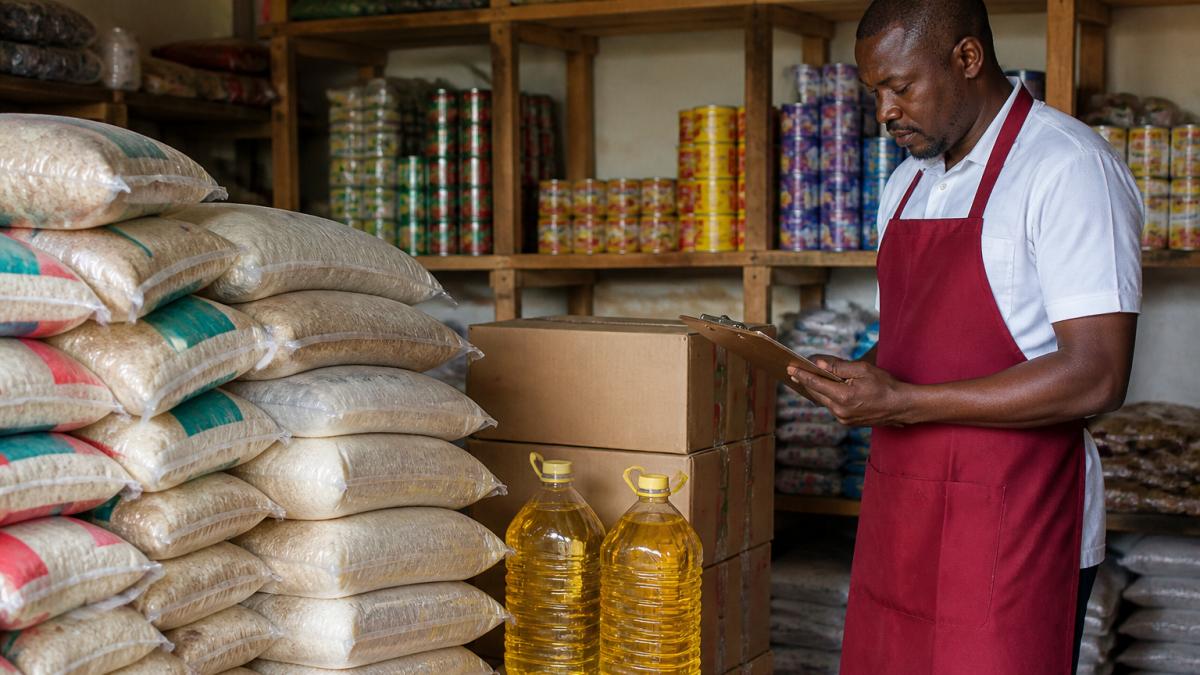
Bulk buying for restaurants saves money only when your cash keeps moving. The trap is buying three months of stock and running out of money for fresh produce. Bulk purchasing works best on items that store well and sell fast.
Most guides tell you what to bulk buy. The missing piece is how much to buy. Use this simple formula before any bulk order:
Bulk order quantity = (Average weekly usage × Weeks of cover you can afford) − Current stock on hand
Weeks of cover is the number of weeks you can store the item without spoilage, without tying up cash you need for payroll or fresh produce, and without exceeding your storage capacity. For dry goods like rice or oil, 4-6 weeks is a common starting point. For packaging, 2-4 weeks. For anything perishable, do not bulk buy at all.
Follow this rule:
- Buy in bulk: rice, oil, flour, dry goods, cleaning supplies, packaging
- Buy in small batches: fresh produce, meat, dairy, anything with a short shelf life
- Never bulk buy: items you have not sold through before
A common mistake is treating a discount as profit. A discount on stock you cannot store or sell is just cash sitting in a corner. Before you accept a bulk discount, calculate the true cost of holding that stock:
- Cash tied up: Money spent on three months of oil is money not available for fresh produce or emergency repairs.
- Storage cost: Shelving, pest control, and space all have a cost.
- Spoilage risk: Even dry goods can expire or attract pests if stored poorly.
- Opportunity cost: That cash could earn a supplier early-payment discount elsewhere.
A discount only saves you money if the item sells before it spoils and the cash you tied up was not needed elsewhere. If a supplier offers 10% off for buying three months of stock, but you could have used that cash to take a 5% early-payment discount on fresh produce each month, the bulk deal may not be worth it.
A practical approach is to bulk buy only your top five dry goods by spend, and only after you have four weeks of usage data. For everything else, buy in smaller batches and negotiate better terms instead of larger quantities.
Step 5: Tighten Restaurant Inventory Management to Stop Overordering
Restaurant inventory management is the practice of tracking what you have, what you use, and what you need to reorder, so you never buy blind. Overordering is the quiet killer of margins. It ties up cash, fills storage, and ends in spoilage.
Do three things to tighten it:
- Count stock weekly. A simple sheet beats guesswork.
- Set reorder points. When rice drops below a set level, reorder.
- Track usage per dish. Know what a plate of jollof actually consumes.
Step 6: Learn How to Reduce Food Waste in Restaurants and Protect Your Margins
Knowing how to reduce food waste in restaurants starts with measuring it. Waste you can see is waste you can stop. Food waste is money you already paid for, so cutting it is a direct saving.
Practical steps:
- Label containers with dates. First in, first out.
- Repurpose trim and surplus. Stocks, sauces, staff meals.
- Portion with scales. Free-pouring costs more than it looks.
- Review waste weekly. Spot the patterns and fix them.
The Food and Agriculture Organization notes that food loss and waste are a major cost across food service worldwide. Every kilo you save is a kilo you do not rebuy.
Step 7: Negotiate, Compare Quotes, and Lock In Delivery Costs
Delivery costs quietly eat savings. A cheap order with expensive delivery is not cheap. Always compare the landed cost: goods plus delivery plus any handling fees.
Negotiate like this:
- Get three quotes for the same list.
- Ask for delivery to be included on larger orders.
- Request a standing order rate for repeat items.
- Confirm delivery timelines in writing.
For businesses that need reliable nationwide delivery and mobile money payment, Bundle Buy Ghana offers flexible pricing and convenient bulk purchasing for shops, restaurants, and institutions across the country. You can check current prices on the Bundle Buy Ghana website.
Common Mistakes That Quietly Raise Your Restaurant Supplies Bill
Several habits raise your bill without ever showing on a receipt. Fix these and the savings compound month after month.
- Chasing discounts over storage capacity. You buy more than you can use.
- Ignoring delivery costs. The landed cost is what you actually pay.
- No stock counts. You reorder what you already have.
- Skipping quote comparisons. You accept the first price offered.
- Buying equipment on price alone. Repairs and downtime cost more.
- No supplier relationship. Loyalty earns better terms and priority stock.
Frequently Asked Questions
Is buying restaurant supplies in bulk actually cheaper?
Bulk buying lowers the unit price on staples like rice, oil, flour, and cleaning products, but only if you can store them properly and use them before they spoil. Work out your real weekly usage first, then buy in quantities you will finish within the shelf life. A slightly higher unit price from a supplier who delivers on time often beats a cheap bulk order that sits in a hot storeroom and degrades. Match order size to storage capacity and turnover, not to the biggest discount on the sheet.
How do I compare prices from different restaurant supply stores fairly?
Compare on landed cost, not headline price. Add delivery charges, fuel or transport to collect, and any handling fees, then divide by the usable quantity after trimming and wastage. Ask each supplier for the same pack size and the same specification so you are comparing like for like. Request written quotes valid for a set period, and check payment terms, since a supplier offering 14-day terms can be worth more to your cash flow than a small discount elsewhere.
How often should a restaurant reorder supplies?
Most kitchens do best with a weekly order for fresh and perishable items and a monthly order for dry goods, cleaning chemicals, and packaging. Set reorder points for each item based on your average daily usage multiplied by your supplier's lead time, plus a small buffer. Review the numbers monthly and adjust for seasonal peaks. Ordering too often raises delivery costs and admin time; ordering too rarely leaves you short during busy service.
How can a restaurant find reliable wholesale food suppliers in Ghana?
Start with suppliers who can show consistent stock, clear pack sizes, and a delivery record you can verify with other businesses nearby. Ask for references from similar-sized kitchens, and test a new supplier with a small first order before committing to a monthly contract. Confirm how they handle short deliveries and damaged goods in writing. Suppliers offering nationwide delivery and mobile money payment remove a lot of friction, especially for kitchens outside Accra.
Running a kitchen in Ghana means balancing tight margins against rising costs. Bundle Buy Ghana makes that easier with wholesale and retail FMCG goods, flexible pricing for small and large buyers, reliable nationwide delivery, and convenient mobile money payments. Get started with Bundle Buy Ghana and stock your kitchen with essentials that arrive on time, so you can focus on serving customers.