 ultimate-guide
Choosing Reliable FMCG Suppliers in Ghana: 2026 Guide
Last Updated: October 23, 2026
Quick Summary
Choosing reliable FMCG suppliers involves verifying business registration, GRA tax clearance, GSA certification, and Food and Drugs Authority (FDA) registration. It's crucial to visit warehouses to check stock rotation and storage conditions. Compare suppliers based on total landed cost per carton, not just unit price, and monitor on-time delivery and fill rates monthly.
- Photograph batch codes and delivery notes at every drop to settle disputes quickly.
- A supplier 5% cheaper but late one order in five costs more in lost sales.
- Qualify a second supplier for your top ten lines to prevent empty shelves.
- Ghana's food-processing ingredient imports reached $1.24 billion in 2026, 44% above 2023.
Table of Contents
- Why Reliable FMCG Suppliers Decide Whether Your Shelves Stay Full
- What a Reliable FMCG Supplier Actually Looks Like
- How to Verify a Wholesale Supplier Before You Commit
- Your FMCG Supplier Checklist: What to Check Before the First Order
- Wholesale Supplier Payment and Delivery Terms Compared
- Supplier Scorecards: Measuring Service Levels After You Sign
- Risk Management and Contingency Planning for Stock Shortfalls
- Conclusion
- Frequently Asked Questions
Why Reliable FMCG Suppliers Decide Whether Your Shelves Stay Full
Ghana's fast-moving consumer goods sector grew 15% in value and 6% in volume in the first quarter of 2026, according to Maverick Research data reported by Joy Business Ghana.
Choosing reliable FMCG suppliers is the single decision that determines whether your shelves stay full, your margins hold, and your customers keep coming back.
Below, we'll show you exactly how to separate a supplier who delivers from one who leaves you explaining empty shelves to customers.
What a Reliable FMCG Supplier Actually Looks Like
A reliable FMCG supplier is a business that consistently delivers the right product, in the right quantity, at the agreed price and time, with verifiable quality and compliance behind every carton. Reliability is measurable, not a feeling you get from a friendly sales rep.
Distribution Experience and Product Range
Ask how long the supplier has moved stock and which categories they actually handle. A distributor strong in beverages may be weak in dry foods. Breadth matters less than depth in the categories you sell.
Coverage, Warehousing and Order Fulfilment
Coverage is the difference between a supplier who reaches you and one who reaches you on time. Ask where they warehouse, how they route deliveries, and what their order fulfilment and lead time look like for your location. Nationwide distribution claims mean little without a delivery schedule attached.
How to Verify a Wholesale Supplier Before You Commit
Verification is a paper-and-footwork exercise, not a conversation. The goal is to confirm three things independently: that the business legally exists, that it can physically handle your stock, and that its products are compliant for the category you sell.
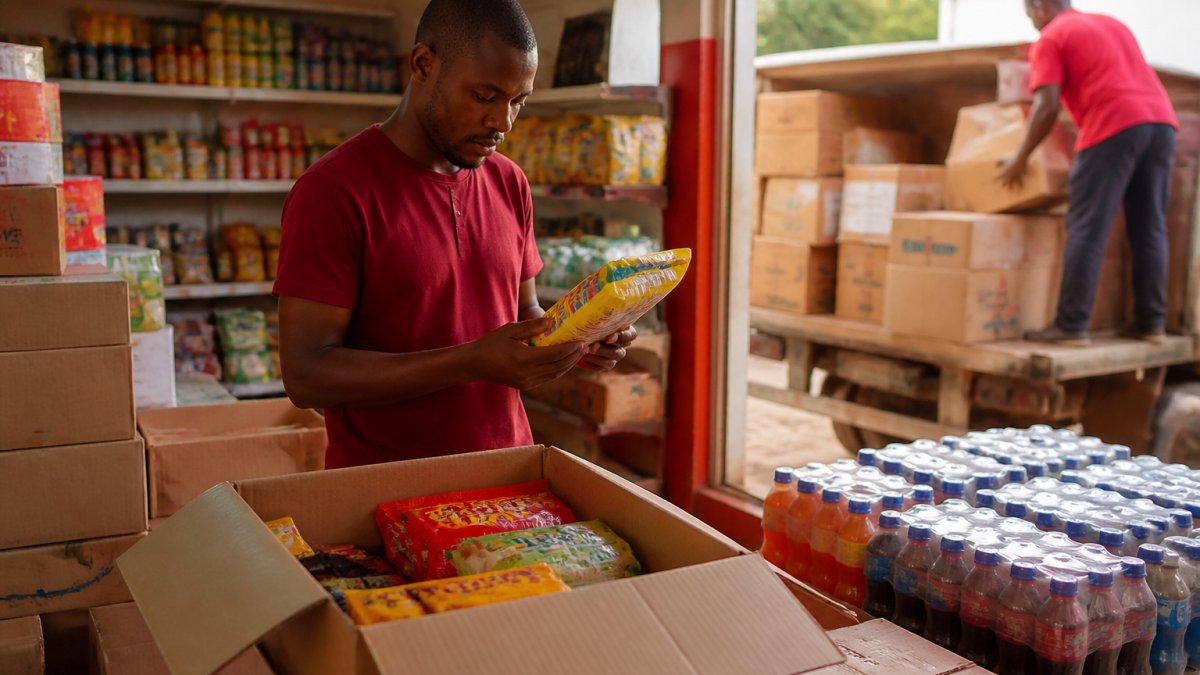
Supplier selection directly affects sales in trading businesses, which is why a 2024 study of Makola Market traders examined the link between how suppliers are chosen and how well those businesses sell.
The documents to request and where to verify them
Start with the corporate paper trail. A legitimate wholesaler should be able to produce:
- Business registration certificate from the Office of the Registrar of Companies, showing the exact legal name you will be paying.
- Ghana Revenue Authority (GRA) taxpayer identification and a recent tax clearance certificate, so you know the entity is active and filing.
- Ghana Standards Authority (GSA) product certification for regulated goods, especially food, beverages, cosmetics, and electricals, confirming the product meets the applicable Ghana Standard.
Cross-check the registration number on the certificate against the Registrar's public records rather than trusting the photocopy. If the supplier cannot name the manufacturer or importer behind a carton, treat that line as unverified.
Compliance and food safety checks that apply here
For food products and beverages, confirm the supplier handles stock under conditions that protect quality and food safety, and that products carry the labelling and registration expected for the category. Under Ghana's food safety rules, prepackaged food should carry a label with the product name, ingredients, net quantity, manufacturer or importer details, batch or lot code, and a best-before or expiry date.
The warehouse visit: what to look at, not just look around
Walk the warehouse with a checklist in hand:
- Stock rotation: are older batches at the front and newer at the back (FIFO), or is stock piled by arrival date?
- Storage conditions: dry, ventilated, off the floor, and, for chilled or frozen lines, a working cold chain with a temperature log.
- Expiry discipline: pick three cartons at random and read the dates. Short-dated stock being pushed to you is a warning sign.
Reference checks that actually reveal something
Ask for three customers in your category and your area, then call them. Ask specifically: how often did deliveries arrive short or late in the last six months, and how was it resolved? A supplier whose references cannot describe a single problem is either new or curated. A supplier whose references describe problems and fixes is usually the safer bet.
Your FMCG Supplier Checklist: What to Check Before the First Order
Use this checklist before you commit a single cedi:
- Business registration and a verifiable physical address
- Warehouse visit completed, with stock rotation and storage conditions observed
- Product range confirmed against your best-selling lines
- Written pricing per unit, per carton, and per pallet
Wholesale Supplier Payment and Delivery Terms Compared
Terms decide your cash flow as much as price does. The mistake most buyers make is comparing the unit price on the invoice and ignoring everything around it. Compare suppliers on total landed cost per carton: the quoted price, plus delivery, plus any payment fee, plus the cost of the stock you tie up while you wait.
| Term | What to Ask | Why It Matters |
|---|---|---|
| Payment timing | Cash on delivery, upfront, or credit period | Ties up working capital |
| Delivery frequency | Fixed weekly route or on request | Determines stock cover needed |
| Minimum order | Per carton, per pallet, or per trip | Affects small shops most |
| Short-delivery policy | Replacement, credit note, or nothing | Protects your margin |
| Payment fees | Any charge on mobile money or transfer | Eats into thin margins |
| Price basis | Ex-warehouse or delivered | Changes the real cost per carton |
Reading a quote properly
Ask every supplier to quote on the same basis so the numbers are comparable. A quote that is "per carton, ex-warehouse" is not the same as "per carton, delivered to your shop." Convert both to a delivered cost per unit before you decide. Then add the payment fee: mobile money and bank transfers can carry a charge, and on thin FMCG margins that charge is real money.
Minimum order quantities and how they shape your cash
MOQs vary by category and by whether you buy by the carton, the pallet, or the truckload. A beverage line may have a pallet minimum because of weight and breakage risk; a dry-goods line may sell by the carton. Ask for the MOQ in the unit you actually sell in, and ask what happens if you order just below it.
Payment rails and credit
Cash on delivery is the simplest and the most common starting point for a new relationship. As trust builds, negotiate a credit period, often 7 to 30 days, but only after you have a delivery history and a written short-delivery policy. At Bundle Buy Ghana, we accept mobile money payments without surprises, so you know your landed cost before you order.
The hidden costs to price in
- Delivery charges that appear only on the invoice, not the quote.
- Trip fees for orders below the MOQ or off the normal route.
- Payment fees on mobile money or transfers.
- Short-delivery leakage, units you paid for but did not receive, and the cost of chasing the credit note.
Supplier Scorecards: Measuring Service Levels After You Sign
A supplier scorecard turns a relationship into a measurable service level. Score each supplier monthly on five metrics, and let the numbers decide who keeps your business.
- On-time delivery rate: percentage of orders arriving within the agreed window
- Order fill rate: percentage of ordered units actually delivered
- Quality complaints: number of rejected or damaged cartons per 100 delivered
- Lead time accuracy: promised versus actual days from order to delivery
Risk Management and Contingency Planning for Stock Shortfalls
No single supplier should be able to empty your shelves.
Supply-chain collaboration is linked to operational performance in FMCG businesses, according to research from the University of Lancashire, and that collaboration starts with clear expectations.
Ghana's imports of food-processing ingredients reached $1.24 billion in 2026, 44% above the 2023 figure of $857 million, per the USDA Foreign Agricultural Service. More of what you sell is sourced internationally, which makes lead time and supplier reliability more important, not less.
Conclusion
The challenge is straightforward: shelves empty fast when a supplier falters, and rebuilding customer trust takes far longer than restocking. Bundle Buy Ghana supplies wholesale and retail FMCG goods with flexible pricing, nationwide delivery, and mobile money payments, so businesses and homes can buy bulk essentials. Get started with Bundle Buy Ghana and keep your shelves full on a schedule you can plan around.
Frequently Asked Questions
How can a small business verify an FMCG supplier before ordering?
Start with the registration documents: ask for the business registration certificate and, where food is involved, confirm the supplier meets Food and Drugs Authority requirements. Then check three practical things: whether they can name the brands and product categories they stock, whether they will give you a written quote with delivery terms, and whether you can speak to two or three existing customers. A short trial order is the cheapest test of all. If a supplier cannot answer basic questions about lead times and stock availability, treat that as your answer.
What should I check before placing a wholesale FMCG order?
Use an FMCG supplier checklist covering product range, stock availability, lead time, delivery reliability, payment terms and returns policy. Confirm the price per carton in GHS, whether delivery is included, and what happens if an item arrives damaged or short. Ask for batch or expiry dates on food and beverages, since short-dated stock is a common problem in wholesale. Get the order confirmation in writing, even if it is a WhatsApp message, so both sides agree on quantities and delivery dates.
How do I compare FMCG supplier prices and delivery terms fairly?
Compare the total cost of supply, not the headline carton price. Add delivery charges, any mobile money fees, the cost of a missed delivery and the cost of holding extra stock because lead times are long. Ask each supplier for the same basket of products so the comparison is like for like. On terms, check payment method, credit period if any, minimum order value and the delivery window. A supplier with a slightly higher carton price but reliable weekly delivery often costs less overall than a cheaper one you chase.
Which FMCG product categories move fastest for retailers?
Food products and beverages, toiletries, cleaning supplies and household essentials form the core of most baskets. Ghana's FMCG sector grew 15% in value and 6% in volume in the first quarter of 2026, according to a report citing Maverick Research, with value growing faster than volume. That gap matters for buyers: shoppers are paying more per item, so watch unit pricing carefully. Stock the fast movers deep and keep a smaller, tested range of slower lines rather than spreading your capital thin.
What happens if a wholesale delivery arrives late or incomplete?
Agree the remedy before you order. A reliable supplier confirms a delivery window in writing and tells you in advance if a line is out of stock rather than substituting silently. Ask what compensation applies for late delivery and how short or damaged items are credited. Keep a simple log of every order with the promised date and the actual date; after three months you will see which suppliers meet their word. For your own customers, keep a buffer of your top five lines so a late delivery does not empty the shelf.
Do FMCG suppliers in Ghana offer credit terms to small retailers?
Some do, but usually after a trading history. New accounts typically start on prepayment or payment on delivery, often by mobile money, and credit is extended once you have placed regular orders. If credit is offered, get the repayment period and any interest in writing. Do not assume a longer credit period is better: a supplier who extends 30 days but delivers late can cost you more in lost sales than one who asks for payment on delivery and arrives on schedule.